
Homeowners and businesses have many options when choosing a new water heater. Among the most popular types are heat pump water heaters(HPWH) and gas water heaters. Each has its own advantages and disadvantages, and they operate differently. Several factors need to be considered when making a choice, including efficiency, cost, and environmental impact. Which is better? Let’s explore these factors to help you make the right water heater choice.

A reliable water heater is essential for every home and business. Whether for everyday showers or domestic hot water, choosing a good water heater can significantly improve your comfort, energy efficiency, and deliver long-term energy savings.
Did you know? Water heaters are the second most energy-consuming appliance in your home, accounting for 20% of total energy consumption. Investing in a quality water heater is more than just getting hot water—it’s about comfort, safety, cost savings, and supporting a sustainable future.
Regardless of the type of water heater you choose, ensure it’s an efficient, durable solution that aligns with smart living principles.
Unlike electrically powered heat pump water heaters, gas water heaters use natural gas or propane to heat water through combustion. In a gas water heater, cold water enters and is heated by a gas burner. The cold water temperature gradually rises from the bottom of the domestic hot water tank. The cold water stored in the tank is heated into hot water, which is then distributed to various outlets.
Gas water heaters heat water quickly and require no electricity. They can provide hot water rapidly and help reduce electricity costs. These benefits make them popular in many homes, especially those connected to gas pipelines.
However, using gas emits carbon dioxide, contributing to higher greenhouse gas emissions. Besides higher carbon emissions, this also increases the risk of gas leaks and potential safety hazards. Families installing it need proper ventilation to ensure safety.
Its working principle is similar to a reverse refrigerator. Heat pump water heaters use electricity to transfer heat from the air to a water tank, rather than generating heat directly. This makes them three times more energy efficient than gas water heaters. They absorb heat from the environment and concentrate it in a domestic hot water tank. They work best in mild to warm climates. In summer, they can also help slightly lower the ambient temperature.
A fan in a heat pump water heater blows ambient air into an evaporator coil filled with refrigerant and compresses it. The compression process increases the temperature and pressure of the air, further heating the refrigerant. The refrigerant flows to the condenser coil, where it dissipates heat to heat the water. When you need hot water, the heat pump delivers it to your home.
Heat pump water heaters (also known as hybrid water heaters) don’t generate heat directly and don’t require combustion. When hot water demand is high, heat pump water heaters use electricity to heat the water.
The following is a more detailed comparison of the advantages and disadvantages of heat pump water heaters and gas water heaters.
Heat pump water heaters and gas water heaters differ significantly in how they generate heat, which directly affects their energy efficiency.
Like air source heat pumps, heat pump water heaters supply hot water by transferring heat rather than directly generating it. This process allows them to reduce energy consumption by up to 70%. Gas water heaters generate heat through combustion to produce hot water faster, but only 60-90% of the fuel energy is converted into actual heat.
The U.S. Department of Energy uses the Uniform Energy Efficiency Factor (UEF) to measure the energy efficiency of water heaters; a higher UEF value indicates higher energy efficiency. Generally speaking, heat pump water heaters are far more energy efficient than gas water heaters, with certified models having a minimum UEF value of 2.20, while the highest UEF value for gas water heaters is only 0.95. Therefore, heat pump water heaters are an ideal choice for users looking to improve energy efficiency.
In terms of hot water efficiency, gas water heaters have an advantage. Gas water heaters are known for their rapid heating, which is highly advantageous for larger families. Gas water heaters heat water twice as fast as heat pump water heaters and have a faster reheating rate, quickly reheating the water in the tank. This makes gas water heaters ideal for families with high hot water demand or those needing to use hot water simultaneously. If choosing a heat pump water heater, a mixing valve can be installed, which helps increase the hot water supply.
When using gas, a standard 50-gallon gas water heater can heat water in one hour, while a similarly sized heat pump water heater may take up to two hours because it relies on absorbing heat from the surrounding environment.
A good water heater should be easy to install, reliable, durable, have a long lifespan, and have a low failure rate.
Gas systems require careful installation of ventilation and gas pipes to prevent leaks and ensure safe operation. The installation cost of a heat pump water heater may be higher than that of a gas water heater. This includes sealing gas pipes, laying condensate drain lines, providing a 240-volt power supply, and ensuring compliance with local regulations before installation.
Heat pump water heaters are generally simpler and safer. Air filters and evaporator coils need to be cleaned every 6 to 12 months to prevent dust buildup. With proper maintenance, your heat pump water heater can last up to 10 to 15 years. Thanks to its built-in intelligent control system, an HPWH is also easier to monitor and adjust remotely.
Gas water heaters, on the other hand, are more complex to maintain. Although they have fewer moving parts, they are more prone to corrosion due to prolonged exposure to combustion gases and high temperatures. Components such as gas pipes, burners, vents, and safety systems require regular inspection. Furthermore, the anode rods that prevent corrosion of the water tank must be replaced every 3 to 5 years. The lifespan of a gas water heater is typically 8 to 12 years.
Cost is a significant factor to consider when choosing a water heater. On average, the initial purchase cost of a heat pump water heater is higher than that of a gas water heater. Fortunately, many areas offer subsidies for heat pump water heaters, which can further reduce the initial cost. (Federal tax credits, state tax rebate programs, and local incentives)
In terms of operating costs, gas water heaters are extremely expensive. Heat pump water heaters are generally more efficient and require less energy to heat water. Due to fluctuating natural gas prices, the operating costs of gas water heaters tend to be higher. One user noted, “The estimated annual operating cost of a Rheem 50-gallon heat pump water heater is $117, while the annual operating cost of a Rheem 50-gallon gas water heater is as high as $288.”
While actual savings depend on hot water demand and local energy prices, heat pump water heaters consistently offer higher efficiency and lower operating costs, making them a more sensible long-term investment.
Climate has some impact on heat pump water heaters. They perform best in areas with mild climates. In cold climates, absorbing heat from the cold air becomes difficult, reducing their efficiency and necessitating the activation of their built-in electric heating systems, which can increase operating costs.
Gas water heaters, on the other hand, are unaffected by outdoor temperatures, providing a stable supply of hot water year-round. Even in cold climates, this type of water heater provides hot water quickly because it generates heat through combustion.
Environmentally conscious homeowners and businesses will assess this factor. What impact will their operation have on the environment?
Heat pump water heaters consistently offer greater environmental benefits. Because they transfer heat without relying on combustion, they do not emit carbon monoxide or greenhouse gases during operation. Gas water heaters, however, can emit these pollutants if poorly ventilated. In contrast, gas water heaters rely on fossil fuels, exacerbating air pollution and carbon emissions.
Heat pump water heaters can also be integrated with solar panels, further reducing your carbon footprint. For homeowners seeking sustainable solutions, heat pumps are undoubtedly a wiser long-term investment.
If you prioritize hot water efficiency and have access to inexpensive natural gas, a gas water heater may be a practical short-term solution. However, if your goal is to improve energy efficiency, protect the environment, and achieve long-term energy savings, then a heat pump water heater—especially a JNOD product—would be a better investment.
When it comes to reliable and efficient hot water solutions, JNOD offers advanced hot water heat pumps that combine performance, style, and sustainability.
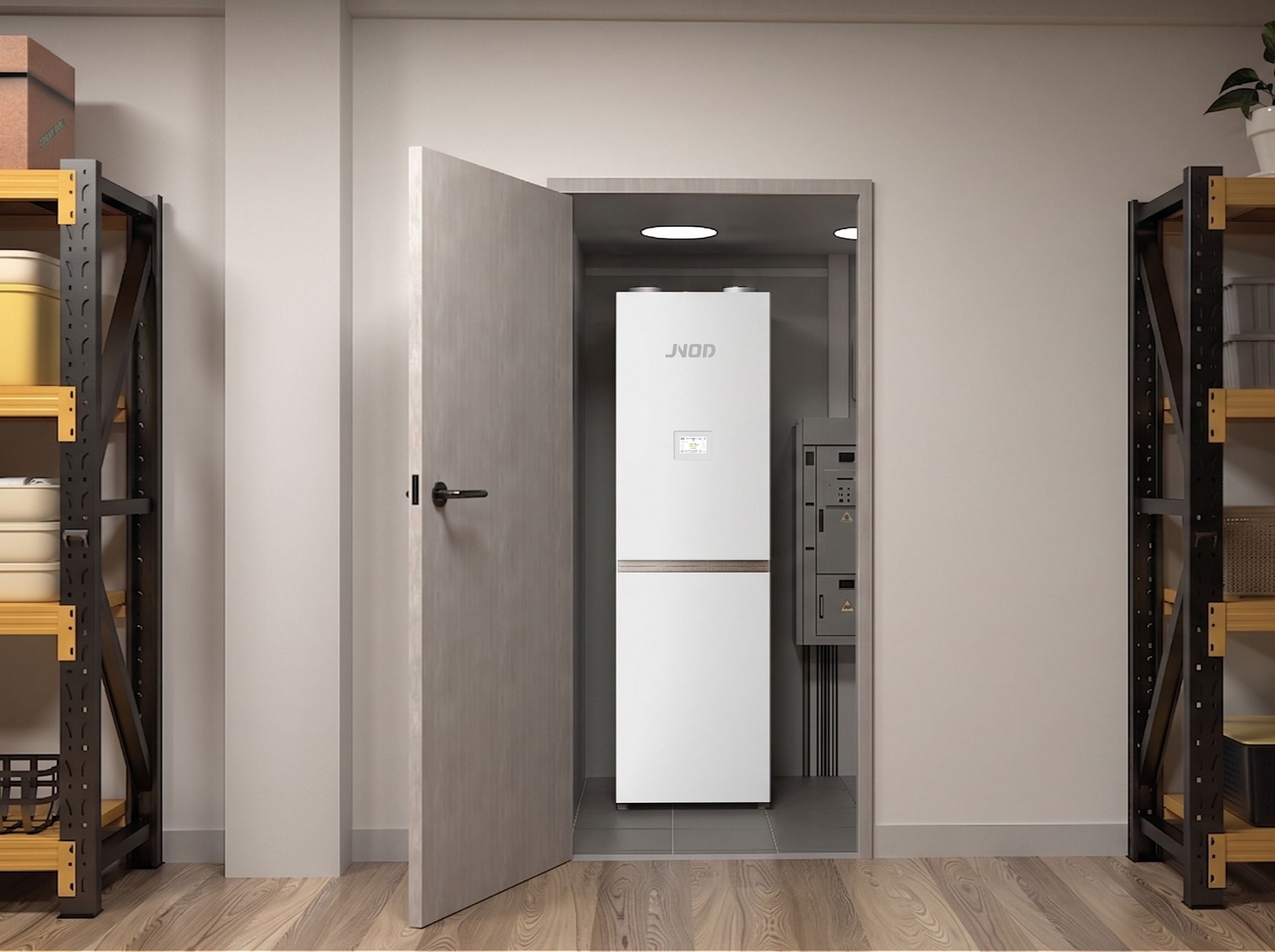
Available in 100L, 200L, and 300L capacities, JNOD models come in both wall-mounted and stand-up versions, with customizable colors to match any home design.
Each unit delivers an outlet water temperature of up to 70°C, making it ideal for daily household use. With SG Ready and PV Ready functions, JNOD heat pumps easily integrate with solar systems and smart grids for maximum efficiency.
Installation is quick and hassle-free, and the intelligent control system ensures precise temperature management at your fingertips.
For homeowners looking to replace traditional gas water heaters, JNOD’s innovative heat pump technology offers a smarter, greener, and more economical choice for the future.
Both heat pump water heaters and gas water heaters can meet hot water needs, but their long-term performance and environmental impact differ significantly. With rising energy costs and growing awareness of sustainability, heat pump technology is emerging as the smarter, greener choice.
For those seeking efficiency, reliability, and smart control, JNOD hot water heat pumps provide the perfect solution — delivering high performance, flexible installation options, and eco-friendly operation that future-proofs your home or business.

 English
  German
  French
  Spanish
  Italian
  Dutch
Dutch