
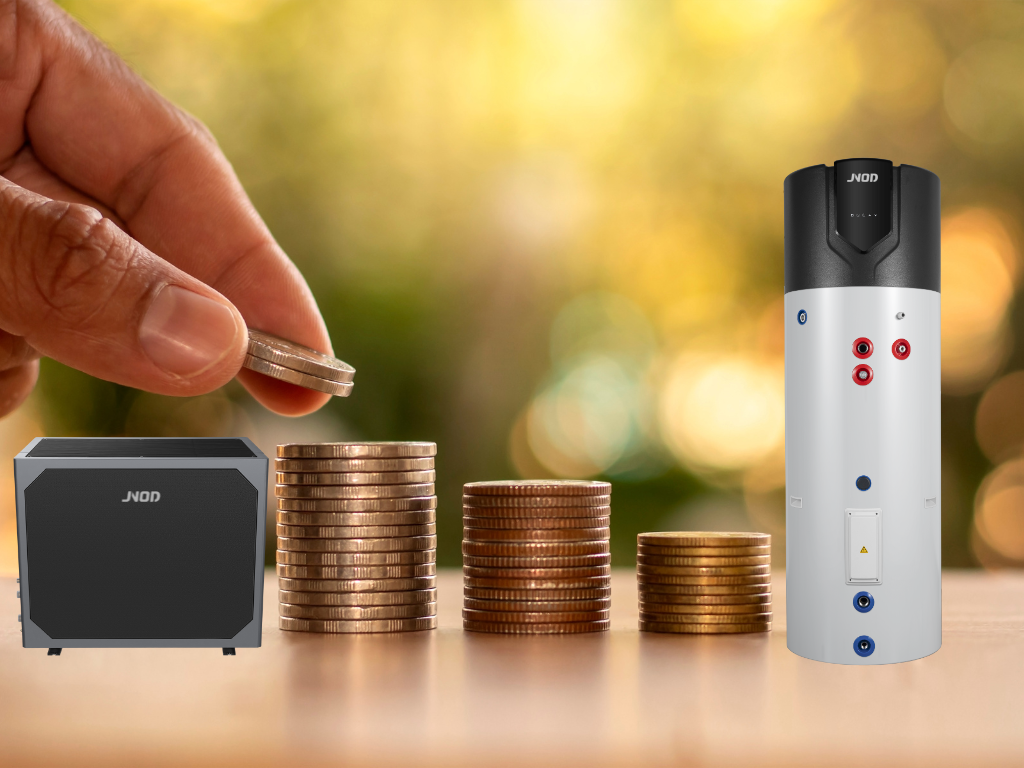
As November temperatures drop across Europe, households in Germany, the UK, Sweden, and Poland are switching on their heat pump heating systems. Heat pumps are known for their high efficiency, but many users find that their actual electricity bills are higher than expected. The reason is usually not the heat pump itself—it’s how it’s used.
Based on real test data from European families, here are five simple heat pump energy-saving tips that require no equipment modifications. With these adjustments, households can save €40–€50 per month, significantly reducing winter heating costs.
Heat pumps operate most efficiently between 19°C and 22°C. Temperatures outside this range lead to unnecessary power consumption:
Real example — Munich, Germany:
The Smith family reduced their thermostat from 24°C to 21°C and saved €32 per month without sacrificing comfort.
Recommended settings:
Northern and central Europe often drops below –5°C at night. Keeping the heat pump running at high temperatures overnight wastes energy. Instead, use the built-in frost protection mode (5–8°C).
Real example — Stockholm, Sweden:
The Lena family switched from maintaining 16°C overnight to frost protection mode and saved €28 per month.
Frost protection prevents pipe freezing at a low load, making it ideal for rooms that remain unoccupied at night or long hours.
Dust buildup blocks airflow and reduces heat exchange efficiency by up to 30%, increasing energy consumption.
Maintenance frequency:
Real example — Essex, UK:
After cleaning their filter, households noticed a 2–3°C increase in outlet air temperature and reduced electricity bills by €15 per month.
Heat pumps work differently depending on whether you use underfloor heating or fan coil units.
Real example — Lyon, France:
Lowering water temperature from 55°C to 48°C saved €22 per month.
Heat pumps use more energy during startup due to preheating. Incorrect usage can increase consumption by 15–20%, according to Germany’s Federal Ministry for Economic Affairs and Climate Action.
Consistent low-load operation is more efficient than frequent restarts.
Saving energy with a heat pump isn’t about reducing comfort—it’s about using the system correctly. These five practical adjustments can help European households maintain a comfortable 20–22°C indoor temperature while lowering winter heating bills.
By optimizing temperature settings, using frost protection mode, cleaning filters, and avoiding constant on-off cycles, you can easily get through the heating season with lower costs and higher comfort.
 English
  German
  French
  Spanish
  Italian
  Dutch
Dutch