
Choosing the right heat pump design is just as important as choosing the right capacity or efficiency rating. One of the most common questions buyers and professionals face today is whether to choose a side discharge heat pump or a top discharge heat pump. Each design has its own advantages, depending on installation space, noise requirements, and application scenarios.
That single difference: where the hot air goes and drives most of the real-world pros and cons. If you’re new to heat pumps, understanding how heat pumps work can help you choose the right discharge design for your home. This guide explains the differences clearly and practically, helping homeowners, installers, contractors, and dealers make informed decisions.
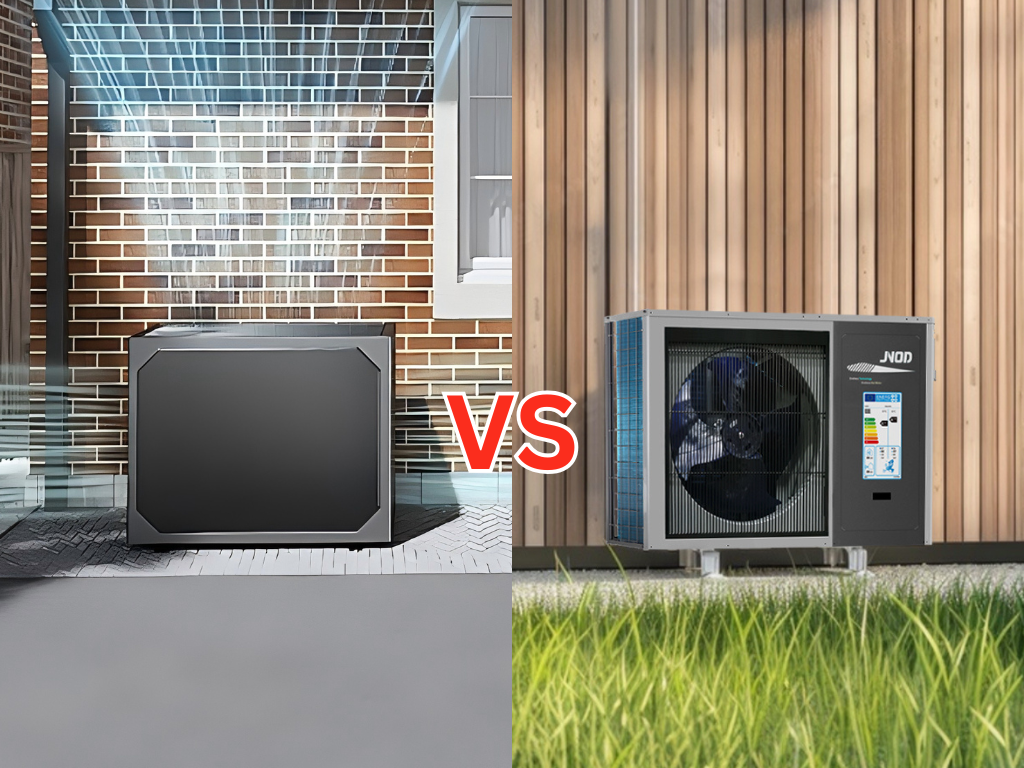
A side discharge heat pump releases air horizontally through the side of the unit. This design is commonly seen in residential installations and traditional outdoor heat pump layouts.
Because air flows outward at ground level, side discharge units typically require more horizontal clearance. They are well-suited for open yards, wide setbacks, or installations where nearby walls or structures do not restrict airflow. Many installers prefer this design because it follows familiar installation standards.
Side discharge heat pumps are often easier to service because components are accessible from the sides. For homes with enough outdoor space, this design offers stable performance and straightforward installation.
A top discharge heat pump directs airflow vertically upward. Instead of pushing air toward surrounding walls or buildings, the unit expels air above the system. In some manufacturers’ product descriptions, top discharge heat pumps are also called top blow heat pumps, referring to the same upward air exhaust design.
This design is especially useful in tight spaces, such as narrow side yards, courtyards, rooftops, or installations between buildings. By sending airflow upward, the risk of hot or cold air recirculation is reduced, improving efficiency in confined areas.
Top discharge heat pumps are increasingly popular in urban environments and renovation projects, where space limitations are common and installation flexibility is critical.
Space availability is one of the biggest factors when choosing between side and top discharge heat pumps. Side discharge models need clear space on at least one side, and ideally on multiple sides, to ensure proper airflow. Top discharge heat pumps are designed for compact layouts. Since air exits vertically, they can be placed closer to walls or fences without compromising performance. This makes them ideal for homes with limited outdoor space or dense housing layouts.
If your outdoor installation space is limited, a top discharge heat pump might be a good option. If you have ample outdoor installation space with enough room on all sides, a side discharge heat pump might be a better choice. For contractors and installers, understanding the site layout early helps avoid airflow issues, noise complaints, and efficiency losses after installation.
Noise is an important concern for homeowners and neighbors. Side discharge heat pumps release sound at ear level, which can sometimes lead to higher perceived noise if the unit faces windows, walkways, or nearby properties.
Top discharge heat pumps send most of the airflow and noise upward. This reduces horizontal noise spread and can make the system feel quieter in daily use, especially in residential areas with close building distances. Furthermore, if you don’t want the side-blowing air to affect the surrounding environment, causing dust and discomfort, I think a top discharge heat pump would be better.
In noise-sensitive environments, such as residential neighborhoods or multi-family housing, top discharge designs often offer a noticeable comfort advantage.
Side discharge heat pumps usually provide easier access to internal components from the sides, which can simplify routine maintenance and servicing. This is one reason many technicians are familiar with this layout.
Top discharge units may require a slightly different service approach, but modern designs are increasingly optimized for easy access. Removable panels and smart layouts ensure maintenance remains efficient and safe.
For long-term operation, both designs can be equally reliable when installed correctly and maintained according to manufacturer guidelines.
There is no single “best” option for every project. Side discharge heat pumps are a strong choice for homes with open outdoor spaces and traditional layouts. They offer familiarity, easy servicing, and proven performance. Top discharge heat pumps are ideal for limited spaces, urban environments, rooftops, and noise-sensitive areas. Their upward airflow design improves flexibility and installation options without sacrificing efficiency.
For homeowners, it depends on your installation location and budget. Side-discharge heat pumps are widely used and have lower upfront costs. By considering space, noise, installation conditions, and long-term use, you can choose the heat pump design that best fits your project and ensures reliable comfort for years to come.
For business professionals such as installers and distributors, you may also need to consider product competitiveness and a differentiated product portfolio. They should all have both side-vent and top-vent heat pumps in stock to meet the needs of different customers.
 English
  German
  French
  Spanish
  Italian
  Dutch
Dutch