
As November arrives, Northern Europe—including Norway, Sweden, and Finland—enters a deep winter freeze where -15℃ becomes the new normal.
With temperatures dropping, many homeowners using low-temperature heat pumps begin to ask the same questions:
“Can my heat pump handle the extreme cold? “Will my electricity bill rise dramatically?”
To address these concerns, we reviewed real user data from Europe, including heating records from Norway, Sweden, Germany, and Finland. Below are the three most frequently asked questions, along with practical insights and verified performance results.
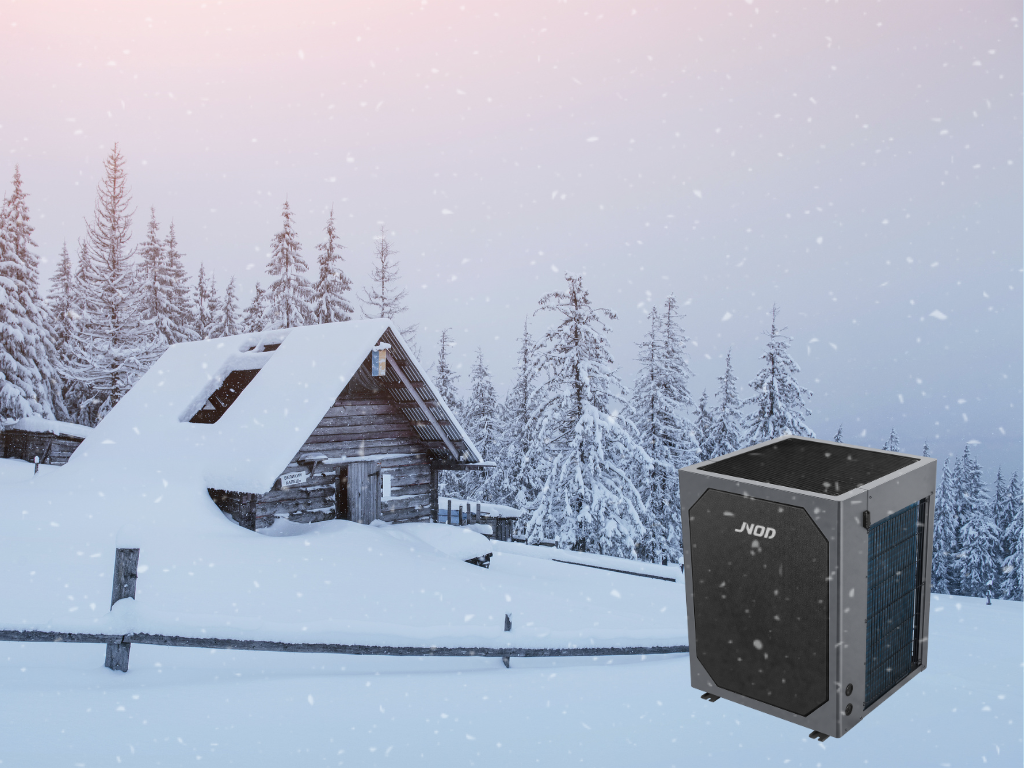
Q1: Do Low-Temperature Heat Pumps Need Electric Auxiliary Heating at -15℃?
A: Only when necessary — not continuously.
Modern low-temperature heat pumps, especially those using R290 refrigerant + jet-injection enthalpy technology, can still achieve: COP 2.5–3.0 at -15℃ (1 kWh electricity → 2.5–3 kWh heat).This means the heat pump alone can provide stable heating without relying on electric auxiliary heaters. Activating the auxiliary heater is only cost-effective when:
- Outdoor temperatures drop below -25℃
- Rapid heating is temporarily needed (e.g., 1 hour before coming home)
In Oslo, Norway (Bjorn Family), heating costs €120 per month using only the heat pump. If the heat pump is turned on and the electric auxiliary heating is frequently used, the cost increases to €180 per month. This represents a significant increase in energy costs.
Setting the auxiliary heating to automatic mode allows the system to activate only when needed—ensuring comfort while avoiding unnecessary energy consumption.
Q2: How Much Extra Electricity Does Defrosting Use?
Frost buildup is common at low temperatures, and defrosting is a necessary process. But the energy cost is much lower than most users imagine.
Typical defrost cycle at -15℃:
Every 40–60 minutes, 0.5–1 kWh per defrost, 2–3 cycles per day, monthly cost increase: only €5–8. This is a record from a user in Berlin, Germany.
At -15℃, the heat pump defrosted twice per day for 15 minutes each time, adding just €0.3/day—negligible compared to overall heating costs.
High-quality heat pumps use intelligent defrosting, activating only when frost accumulation reaches a certain level. This prevents unnecessary cycles and improves energy efficiency.
Q3: Is It Normal for Heat Pumps to Be Louder at Low Temperatures?
Yes—this is completely normal. At -15℃, the heat pump’s compressor and fan run at higher speeds to maintain capacity, resulting in a 3–5 dB increase, typically around 50–55 dB (similar to normal conversation) .This slight increase does not affect indoor comfort.
If noise exceeds 60 dB, possible causes include:
- Loose installation brackets
- Snow is blocking the outdoor unit
- Debris or ice interfering with airflow
- Quick fixes usually resolve the issue.
- (User Feedback: Gothenburg, Sweden)
Despite slightly higher noise outdoors, users report no audible noise indoors.
Long-Term Heat Pump Performance: How Durable Are Low-Temperature Heat Pumps?
A household in Helsinki, Finland, has operated a low-temperature heat pump for 5 consecutive winters, enduring conditions as low as -30℃ without any failures.
Annual heating cost: €800, 50% lower than a gas boiler system.
This durability stems from core technology:
- R290 refrigerant for superior low-temperature fluidity
- Jet-injection enthalpy technology improves heating capacity during extreme cold
- EU ERP 2025 energy efficiency compliance, ensuring long-term savings and stability
Heat Pump Performance Conclusion: Low-Temperature Heat Pumps Are Fully Reliable at -15℃
Real-world European data confirms that low-temperature heat pumps deliver strong, stable performance in harsh winter climates:
- No need for continuous electric auxiliary heating
- Defrosting adds only a minimal extra cost
- A slight noise increase is normal and harmless
- Long-term reliability proven at temperatures down to -30℃
With better efficiency and lower annual costs, it’s clear why more European households are replacing traditional heating systems with advanced low-temperature heat pumps.
 English
  German
  French
  Spanish
  Italian
  Dutch
Dutch