
As the demand for energy-efficient and space-saving heating solutions continues to grow, top-blow air blower heat pumps are becoming a popular choice in global markets. Compared with traditional side-blow units, this innovative design offers better airflow, improved efficiency, and enhanced installation flexibility.
In this comprehensive Q&A guide, we answer the most frequently asked questions about JNOD top-blow air blower heat pumps—covering design logic, performance, installation, smart control, and after-sales support.
Q1: Why Choose JNOD R290 Top-Blow Heat Pump?
A1:The top-blow design is not just a structural change—it represents a full upgrade in performance and user experience.
- Higher efficiency: Optimized from two-side airflow to three- or four-side air intake, increasing airflow and improving energy efficiency
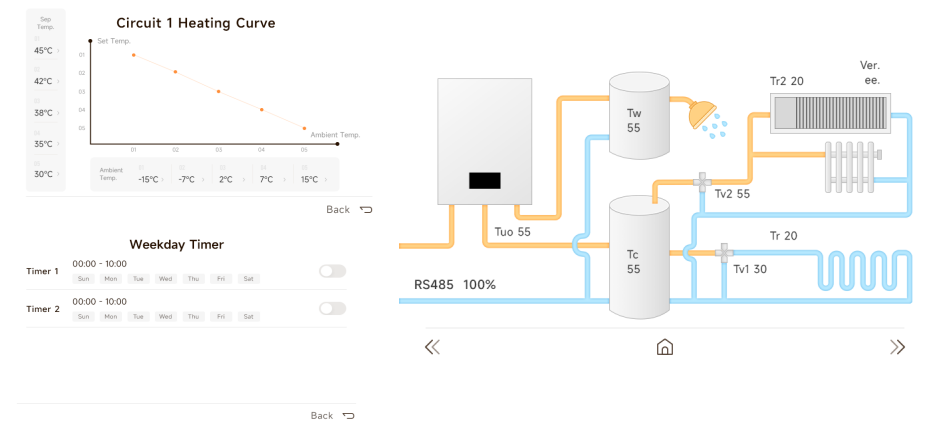
- Better comfort: Avoids direct airflow toward people, improving the living environment
- Space optimization: Prevents airflow accumulation in narrow spaces, avoiding “cold island” or “heat island” effects
- Modern appearance: Breaks away from the traditional front-fan design
- Improved safety: Open structure allows refrigerant to disperse quickly in extreme situations
- Stronger differentiation: Highlights JNOD’s innovation and R&D capability
Q2: Why Does a Monoblock Top-blow Heat Pump Still Need an Indoor Unit?
A2:Although it uses a true monoblock system (refrigerant fully contained outdoors), an indoor unit improves usability and installation.
- Easier wiring for pumps, thermostats, and sensors
- Better integration with whole-house smart control systems
- More convenient for maintenance and after-sales service
- Safer and more practical installation, especially in cold weather
For projects that prefer no indoor unit, integrated solutions like all-in-one heat pump are also available.
Q3: What Is the Difference Between a Hydraulic Module and a Wiring Center? (Indoor Unit)
A3: JNOD offers two types of indoor units: hydraulic modules and connection centers. Below is the difference.
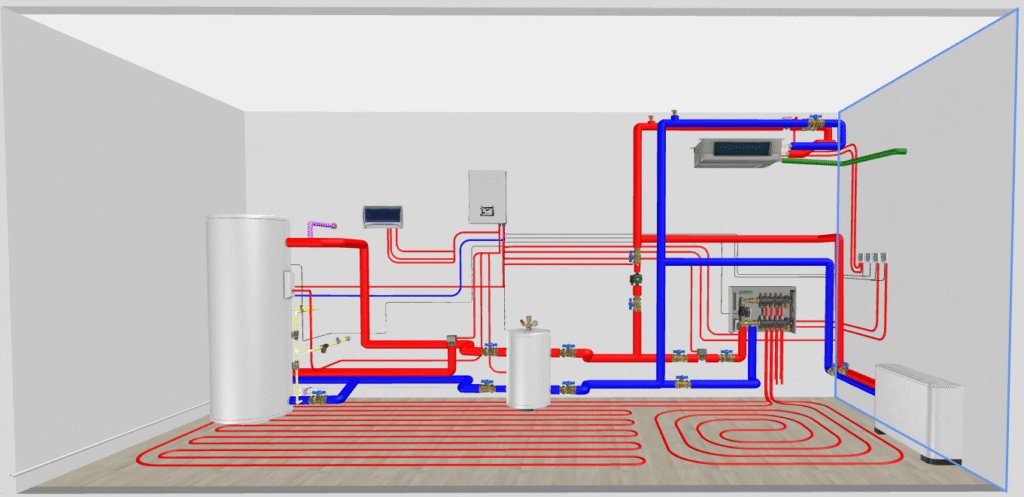
Hydraulic modules integrate the whole-house control system, integrated electric heating, and three-way valves into a single indoor unit, known as a water-based split-type unit. The indoor and outdoor units are connected via water pipes.
Hydraulic modules offer higher integration, especially when hot water functionality is required, as their installation is more standardized. They also integrate electric heating, serving as an auxiliary heat source if the heat pump is insufficient at low temperatures or malfunctions.
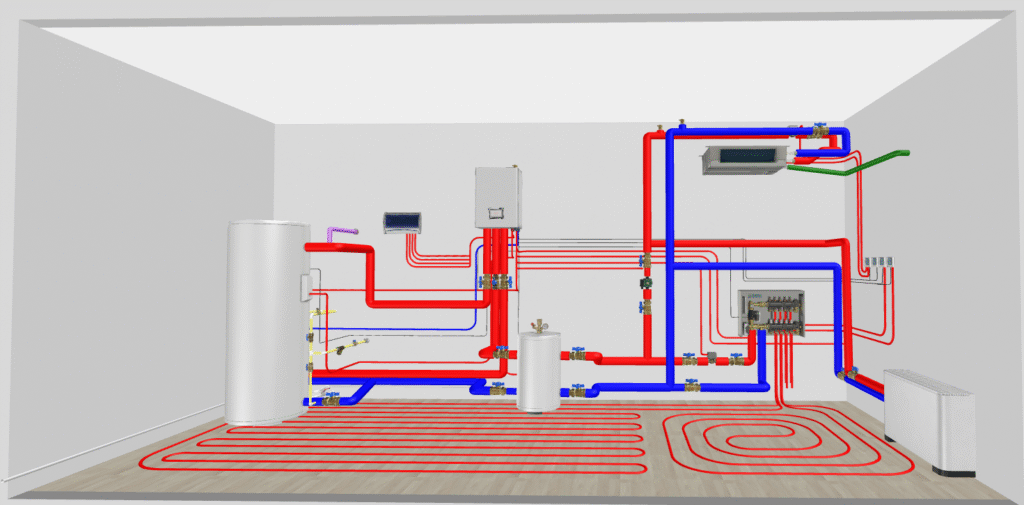
Wiring centers, on the other hand, integrate the whole-house control system into a single indoor unit, known as an electrically controlled split-type unit. The indoor and outdoor units are connected via communication lines.
Wiring centers offer greater autonomy. They are more cost-effective if hot water functionality is not required. However, installing external three-way valves and auxiliary electric heating requires more specialized skills.
Q4: How Efficient Is the SCOP Performance?
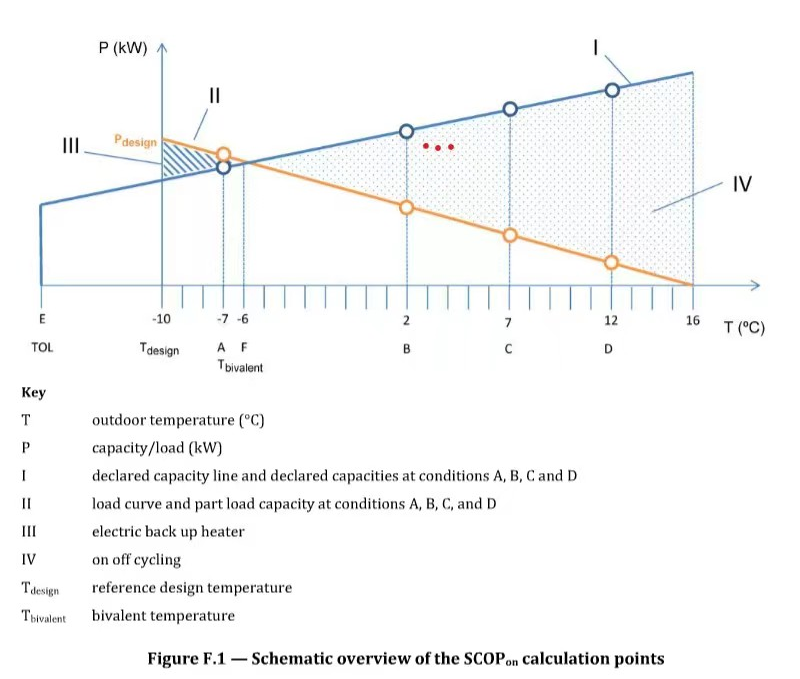
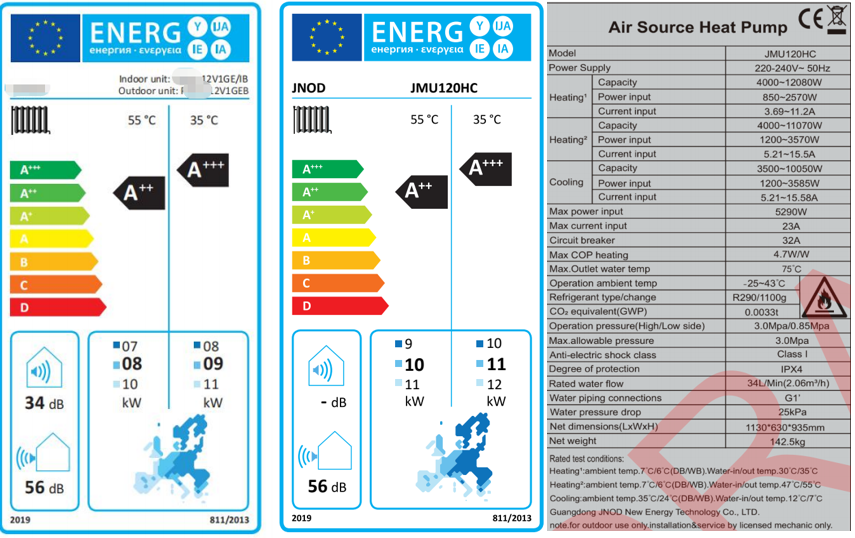
A4: SCOP (Seasonal Coefficient of Performance) must be evaluated together with actual heating capacity (Pdesign).
- JNOD’s three-side air intake top-blow design achieves SCOP comparable to top side-blow systems
- Maintains lower performance degradation between rated and actual output
- New four-side intake models (e.g., outdoor all-in-one heat pump series) can achieve higher SCOP
This means better real-world efficiency, not just lab performance.
Q5: Are There Any Energy-saving Features That Users Can Actually Experience?
A5: Yes, JNOD systems include multiple intelligent energy-saving functions:
- Climate curve control: Automatically adjusts water temperature based on outdoor conditions
- ECO mode: Reduces energy use during working hours or absence
- Hot water priority: Keeps system operating at lower temperatures for higher efficiency
- Dual-zone control: Adjusts output based on different heating zones
- Secondary pump control: Reduces heat loss and pump energy consumption
- Room temperature compensation: Balances fast heating with long-term efficiency
Q6: How About Noise Performance?
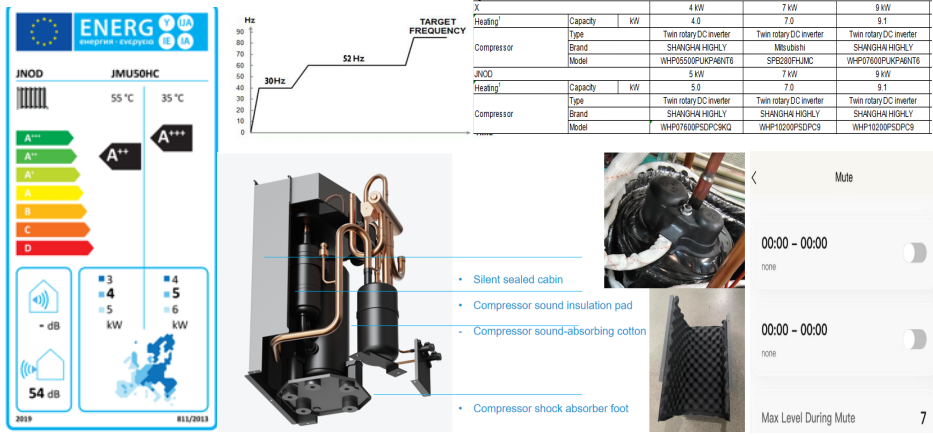
A6: First, JNOD’s certified noise level is extremely low.
Second, JNOD’s technology utilizes multiple noise reduction methods, including physical soundproofing covers.
Third, JNOD employs DC inverter technology; the compressor, fan, water pump, and electronic expansion valve are all brushless DC components.
Fourth, JNOD selects compressors with a larger displacement margin than its competitors, allowing the machine to achieve its rated heating capacity without operating at excessively high frequencies.
Fifth, JNOD also features a silent mode that limits the frequency to even lower levels, resulting in a smoother and quieter start-up and restart curve. However, this sacrifices speed and is suitable for systems that are not shut down after startup.
Q7: Can It Handle Rain and Snow?
A7: Yes, the system is built for harsh environments:
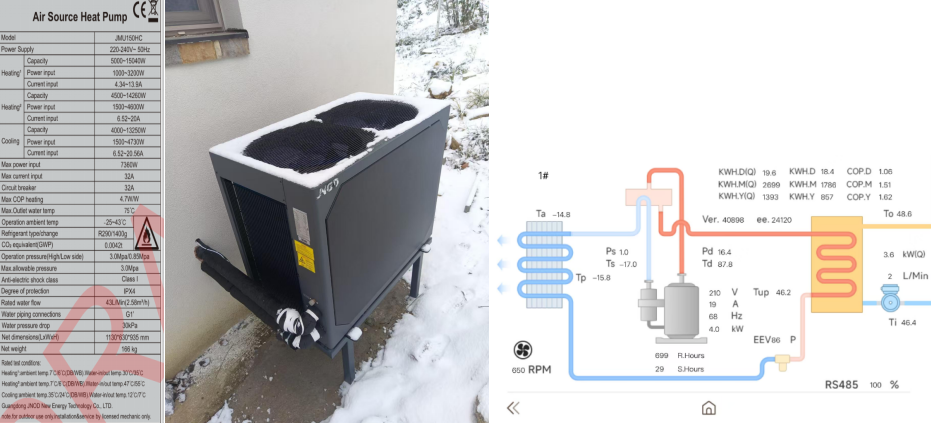
- IPX4 waterproof rating. It can easily withstand and cope with everyday rain and spray cleaning
- Proven operation in extreme cold and heavy snow conditions (e.g., -14.8°C environments)
Q8: Does It Support Solar (PV) Integration?
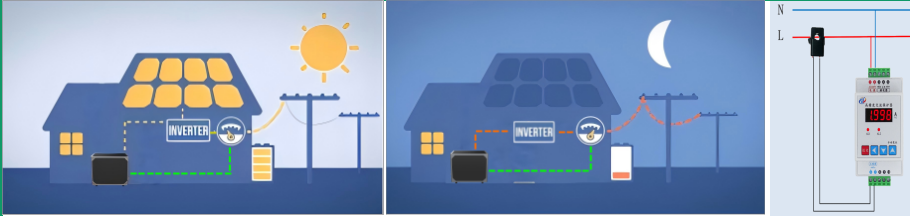
A8: First, it features SG-Ready functionality, limiting output and hot water mode during peak electricity demand, and increasing output and setting water temperature during off-peak electricity demand.
Second, a separate external ammeter (optional) can be purchased. When it detects no power input or output from the mains, the unit enters off-peak electricity mode, rapidly consuming photovoltaic power and storing it in the water tank for secondary energy storage. In scenarios with both photovoltaic and energy storage, a larger energy storage tank and a smaller energy storage battery can be considered.
Q9: Are There Any Third-party Heat Source Linkage Solutions?
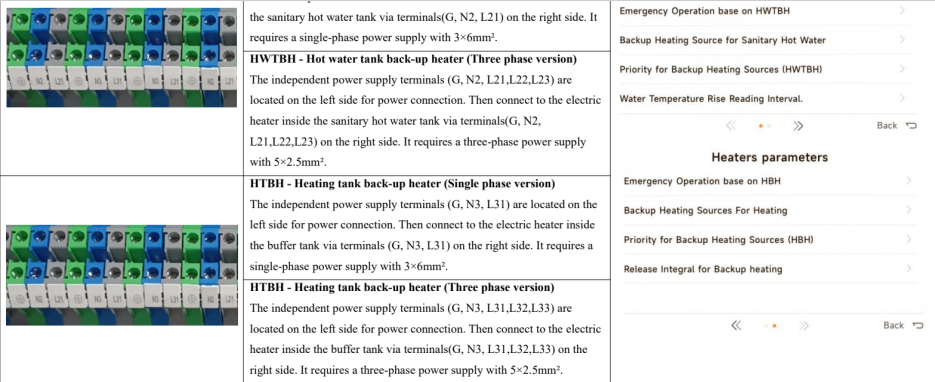
A9: Yes, the indoor units have separate external heat source ports for hot water and heating, requiring separate power supplies. Single-phase indoor units can withstand a maximum current of 45A, while three-phase indoor units can withstand a maximum current of 20A.
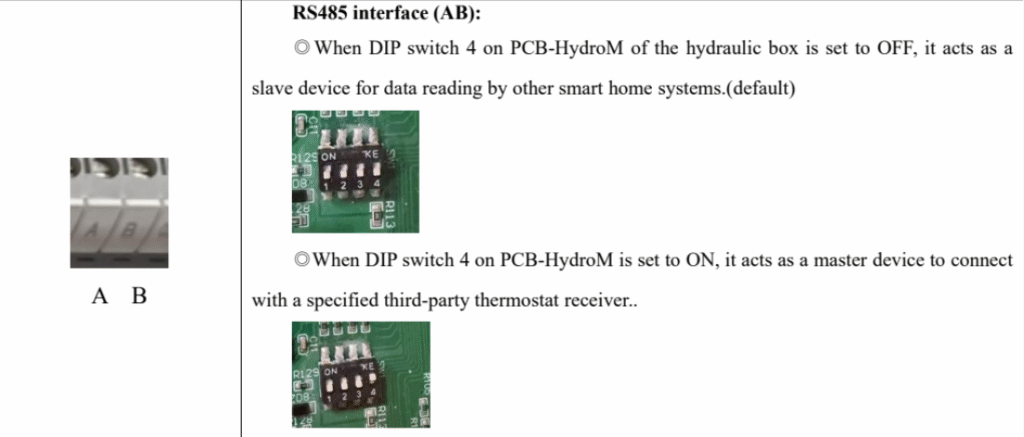
Q10: Does It Support RS485-Modbus?
A10: Yes, JNOD’s indoor units have ports connected to the terminal block, allowing some data to be shared and controlled by third-party central control software as a slave device. If you want to connect to a third-party thermostat, you can change the protocol and choose either master or slave mode.
Q11: Are There Any Remote Control IoT Platforms?
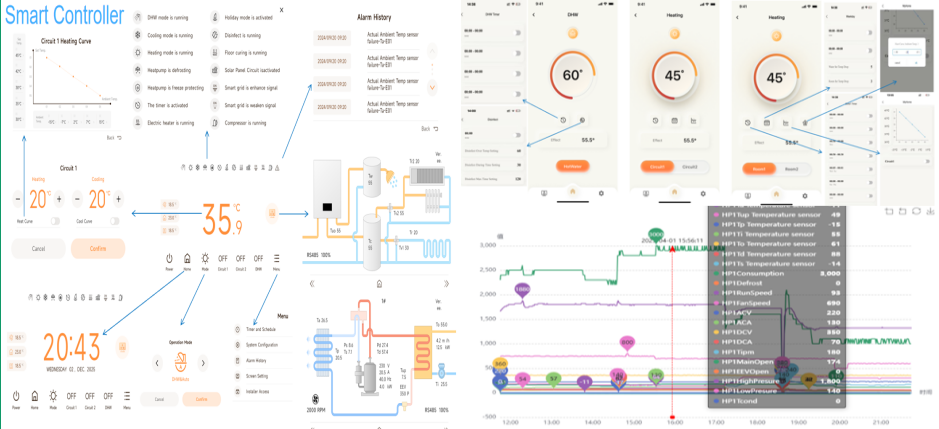
A11: Yes, it’s available at https://jnod.anylink.io/, with a total of 452 data statuses connected.
JNOD not only has its self-developed remote control platform, but its understanding of the Internet of Things goes beyond just the internet itself. It focuses on creating connected “Things,” transforming these connected “Things” into a selling point. JNOD’s IoT feature connects its selling points to the internet, allowing users to easily understand JNOD’s control functions.
JNOD has also designed a beautifully crafted wired controller interface, consistent with its own app. Users interact with the user-friendly interface via IoT, which can be used as a social tool to further promote JNOD’s features and selling points.
It also makes it easier for personnel with less experience in heat pumps to understand more about the unit’s operating status. This provides better after-sales service and reduces the time spent on remote communication and on-site visits.
Q12: How to Choose the Appropriate Size and Installation?
JNOD has a dedicated website for selecting heatpumps: https://heatpump-drw.pages.dev/. Users can fill in their local climate and room size using the website’s options to receive a customized solution. Users and dealers can also discuss installation plans together using the 3D installation guide on the website. This website also provides approximate energy cost comparisons.
Q13: Will the Top-blow Heat Pump’s Size Affect Installation?
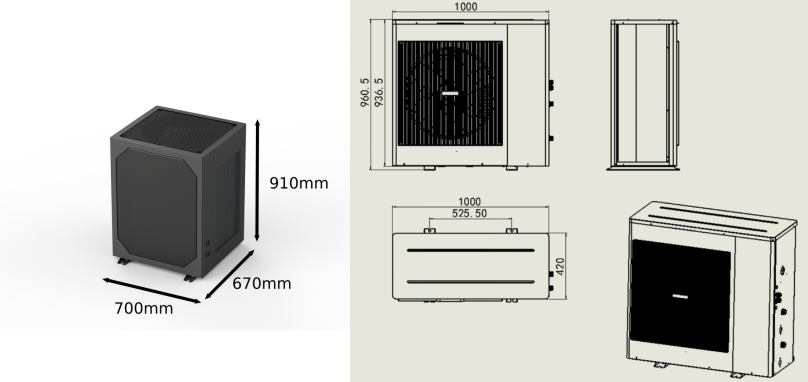
A13: Compared to side-blow units:
- Slightly thicker (+250mm)
- Shorter in length (-300mm)
- Requires more intake space due to multi-side airflow
Proper planning ensures optimal installation.
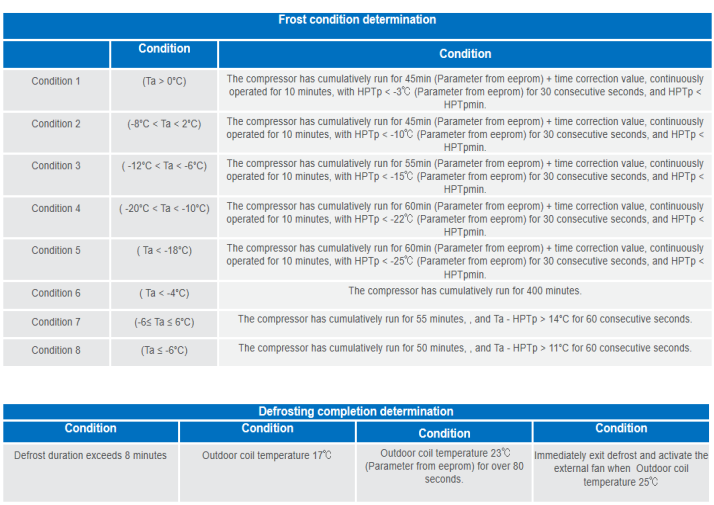
Q14: How Does the Defrost System Work?
A14: JNOD uses an intelligent defrost strategy:
- Detects frost based on temperature differences
- Avoids unnecessary defrost cycles
- Limits defrost time for efficiency
- Uses hot water to improve defrost performance when needed
This ensures stable heating even in cold and humid conditions.
Q15: Does JNOD’s Top-blow Heat Pump Have an Indoor Linkage Solution?
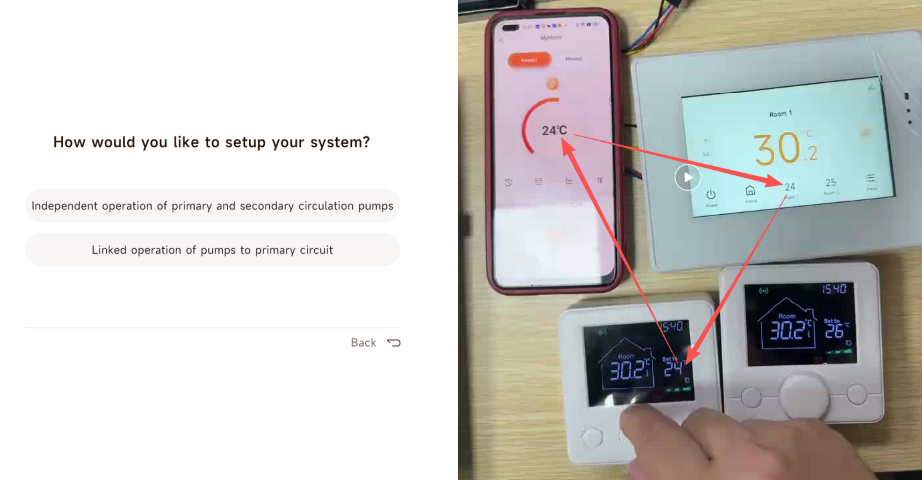
A15: JNOD devices offer two linkage solutions:
- Passive Linkage Solution: This requires initial power-on configuration to enable linked operation. After configuration as “Linked operation of pumps to primary circuit,” the main unit requires a short circuit between C1 and GND, or between C2 and GND, to start.
- Wireless Room Thermostat Solution: This uses wireless transmission to send room temperature, power-on/off signals, and the set room temperature to the main unit (currently does not support cooling).
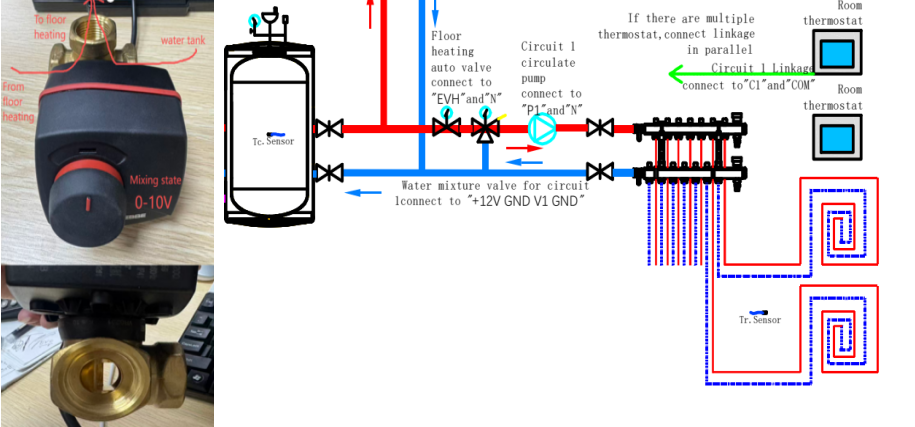
Q16: What is The Dual-Temperature Zone Solution of JNOD’s Top-blow Heat Pump?
A16: Unlike some dual-temperature zone solutions on the market that require an additional mechanical mixing valve, this solution provides a proportional mixing valve model. It outputs 12V power to the proportional valve, senses the mixing temperature, and outputs a control ratio (0-10V) to the mixing valve to adjust the mixing opening.
Q17: What About JNOD After-Sales Support?
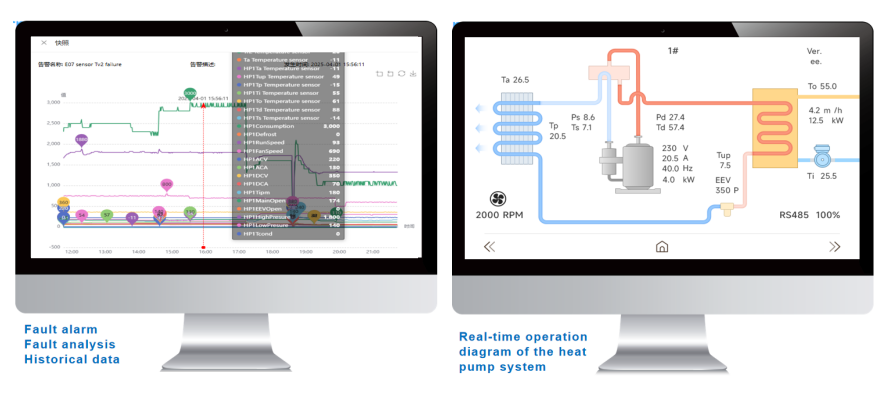
A17: JNOD provides strong technical and after-sales support:
- IoT-based diagnostics for faster troubleshooting
- Transparent data for installers and service teams
- Reduced need for on-site service visits
- Clear performance benchmarks for system evaluation
Conclusion
Top-blow heat pumps represent the next step in heat pump innovation. With improved airflow design, higher efficiency, smart control systems, and strong adaptability, they offer clear advantages over traditional side-blow units.
JNOD combines advanced engineering with practical installation and maintenance solutions, making its top-blow heat pumps an excellent choice for distributors, OEM partners, and project developers worldwide.
 English
  German
  French
  Spanish
  Italian
  Dutch
Dutch