
Direct Answer: Traditional heat pumps do not provide fresh air as they only recycle indoor air. However, modern Integrated Fresh Air Heat Pump can deliver 100% fresh, filtered outdoor air while also heating, cooling, and recovering waste energy.
We ‘ve found that some of our new business partners ask this question: Can a heat pump actually bring in fresh air?
The simple answer used to be no. Most contractors had to pair split units with standalone ventilation boxes, eating up valuable space. But building codes have changed. With strict energy efficiency requirements like the European Commission Energy Efficiency Directive, airtight modern homes require active, mechanical air exchange without throwing away heat.
Here is how modern integrated HVAC engineering finally solves this problem.
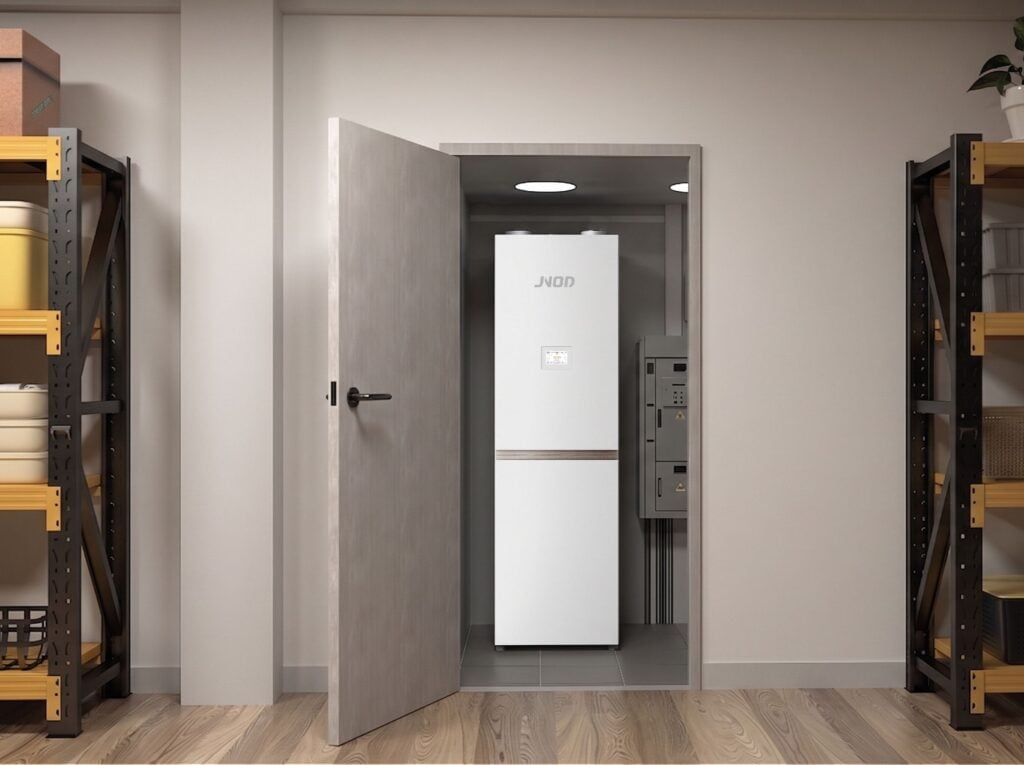
Standard heat pumps move thermal energy—they do not refresh stale air.
A traditional split system cycles the same indoor air over and over. What happens after a few hours? Carbon dioxide (CO2) levels rise, odors stays, and rooms start to feel stuffy. Opening a window fixes indoor air quality, but it dumps your expensive heating straight outside.
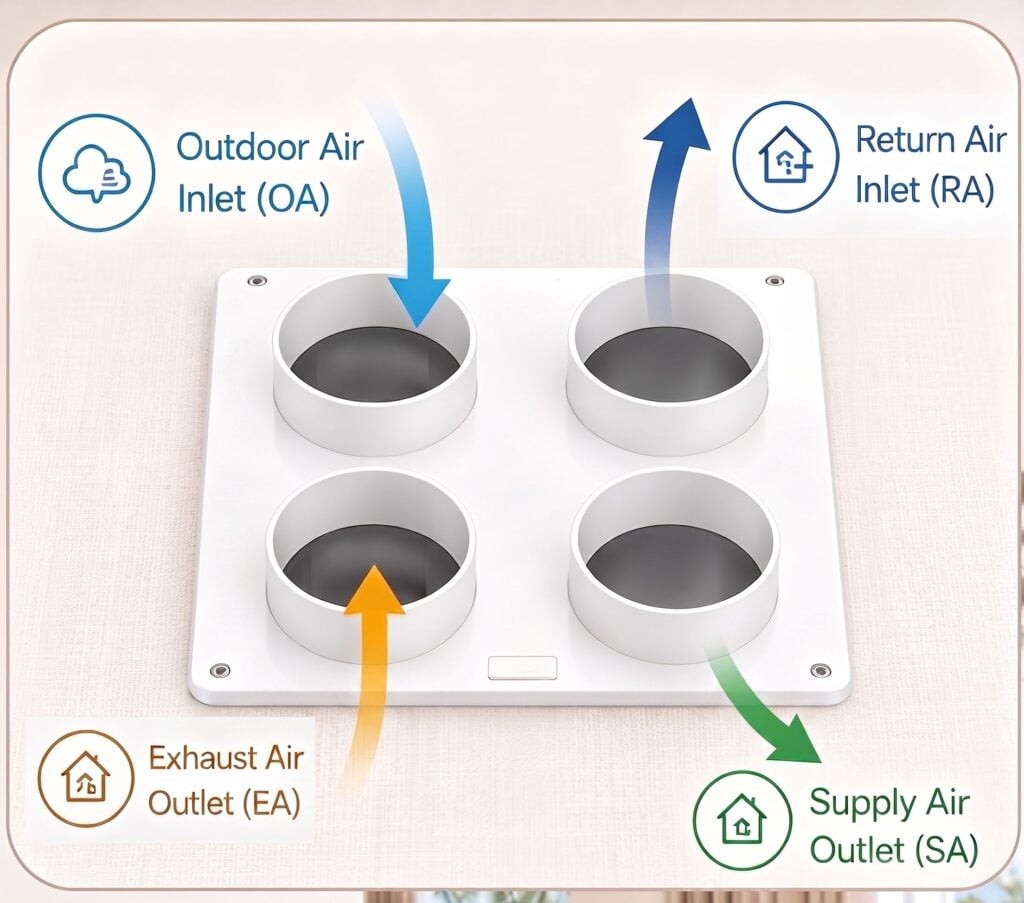
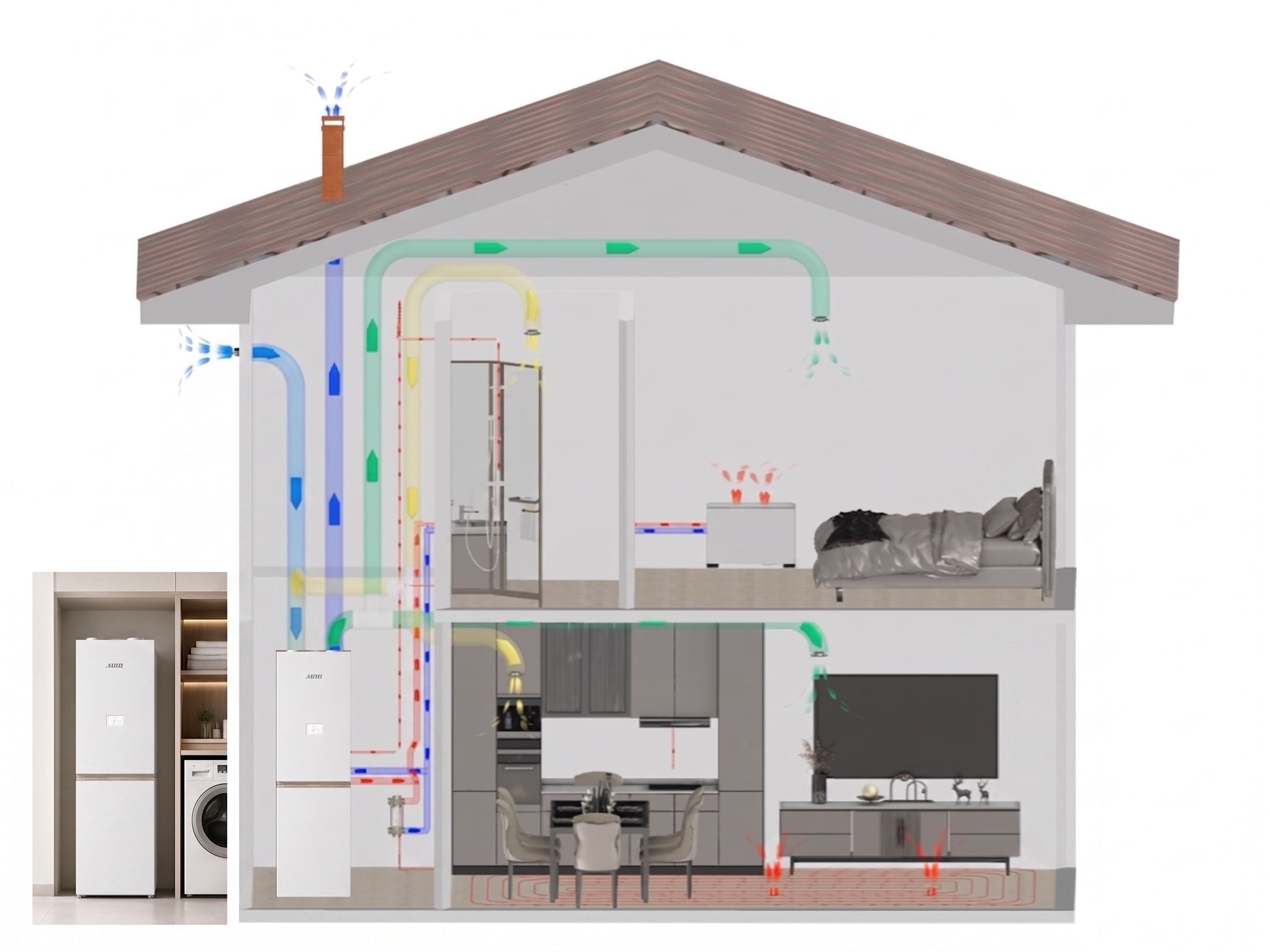
We solved this problem by engineering a balanced 4-duct ventilation system compliant with European residential standards (EN 13141-7). The JNOD Fresh Air Heat Pump uses four top ports: Outdoor Air (OA), Supply Air (SA), Return Air (RA), and Exhaust Air (EA). It extracts stale, humid air from wet rooms and delivers pre-conditioned, filtered outdoor air right to bedrooms and living spaces.
| Feature | Standard Heat Pump | JNOD Fresh Air Heat Pump |
|---|---|---|
| Air Source | Recycle Indoor Air | 100% Fresh Outdoor Air |
| Ventilation Capacity | None (0 m³/h) | Up to 350 m³/h Active Airflow |
| Filtration Level | Basic Dust Screen | Dual F5 (Coarse) + F9 (PM2.5) High-Efficiency Filters |
| Heat Recovery | Not Applicable | High-Efficiency Exhaust Air Energy Recovery |
| Outdoor Unit Required | Yes | No (100% Indoor Monoblock Footprint) |
The physics is straightforward. It operates in two stages tested under EN 14511 performance metrics.
Our system extracts thermal energy through intelligent dual-source management. It prioritizes recovering the high-grade 20°C waste heat from indoor exhaust air (kitchens and bathrooms) before pulling extra energy from outdoor ambient air. Why vent 20°C air outside when you can use it to heat your water and living spaces?
Fresh outdoor air passes through an F5 pre-filter to trap dust, pollen, and debris. It then travels through an F9 medical-grade filter that removes over 95% of tiny particles, including PM2.5 and fine allergens.
The heat pump core adjusts incoming clean air to your target temperature before ducting it through the supply vents. Stale indoor air is simultaneously routed outside. Indoor pressure stays balanced, and rooms stay comfortable year-round.
We built this system to solve typical installation problems for developers, HVAC contractors, and distributors.
Always match hardware capabilities with your project’s architectural specs.
For standard European apartments and villas (80–200 m²), look for an airflow capacity between 150–350 m³/h. This delivers a full air exchange every 1 to 2 hours without generating annoying duct noise.
High-performance filtration adds duct resistance over time. The JNOD unit integrates triple smart sensors—monitoring R290 refrigerant safety, indoor air quality (IAQ), and real-time wind pressure. This system dynamically adjusts fan speeds to maintain steady airflow and tells you exactly when to service the F5/F9 filters.
Managing multiple rental properties or residential projects? Our MaxT App and IOT cloud management platform let distributors and facility teams run remote diagnostics, adjust multi-zone schedules, and catch fault codes before homeowners even notice an issue.
Yes! Our advanced R290 thermodynamic circuit operates smoothly down to -25°C, pulling heat from both cold ambient air and warm indoor exhaust streams.
No. The JNOD Fresh Air Heat Pump combines heat pump thermodynamics with continuous mechanical ventilation, making separate HRV or ERV equipment completely unnecessary.
We recommend checking the filters every 6 months and replacing them every 12 months, depending on local outdoor air quality.
Not at all. With sound internal insulation and variable-speed DC inverter fans, the unit runs in an ultra-silent mode designed for utility closets and indoor mechanical rooms.
No
Are you an HVAC distributor, property developer, or brand looking for integrated indoor heat pump solutions?
We provide direct factory supply, full European compliance certifications, low MOQ, and complete OEM/ODM customization.
Planning a new residential project or expanding your HVAC product line? Contact our engineering team today for a free project sizing calculation and wholesale catalog!
 English
  German
  French
  Spanish
  Italian
  Dutch
Dutch