
A heat pump commissioning checklist helps installers verify water flow, electrical connections, safety devices and system controls before startup. Even a correctly installed heat pump may underperform if these checks are overlooked.
For an air-to-water heat pump, commissioning goes beyond switching on the outdoor unit. The hydraulic circuit, electrical supply and control settings must work together.
This guide covers the essential commissioning checks for air-to-water monobloc heat pumps, drawing on JNOD’s installation manual and practical installation requirements.
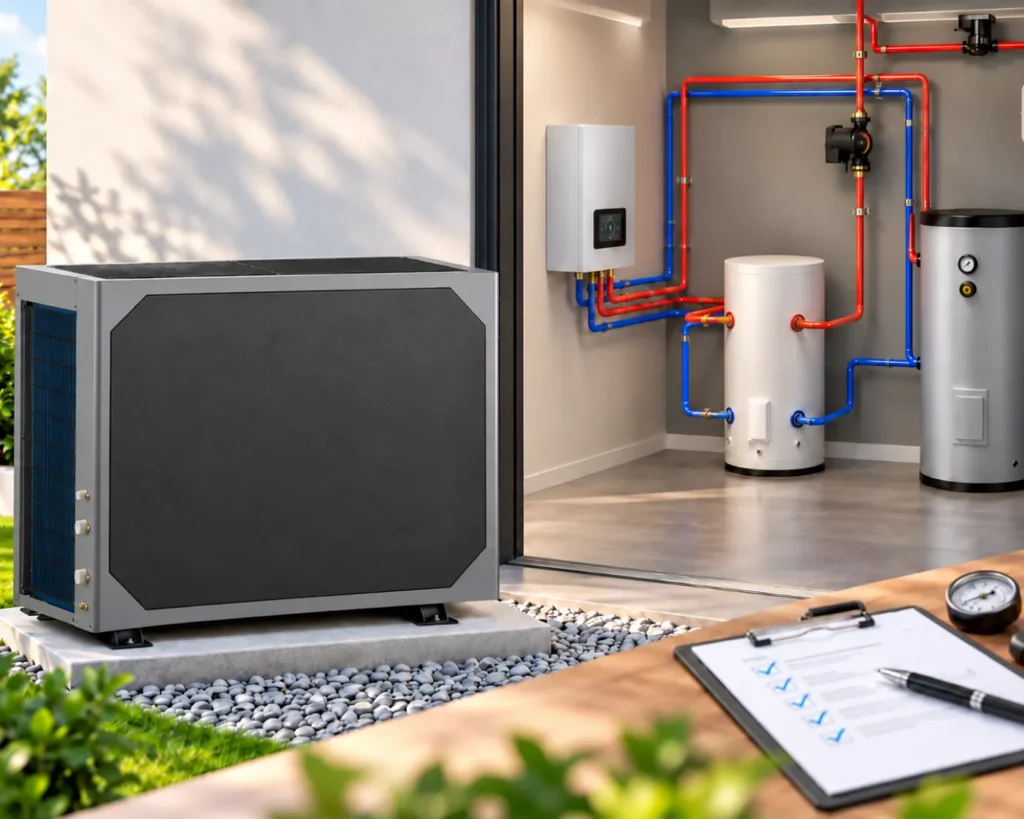
Commissioning begins once mechanical and electrical installation is complete.
Before startup, confirm that the outdoor unit is securely mounted, water connections are finished and the required safety devices are installed.
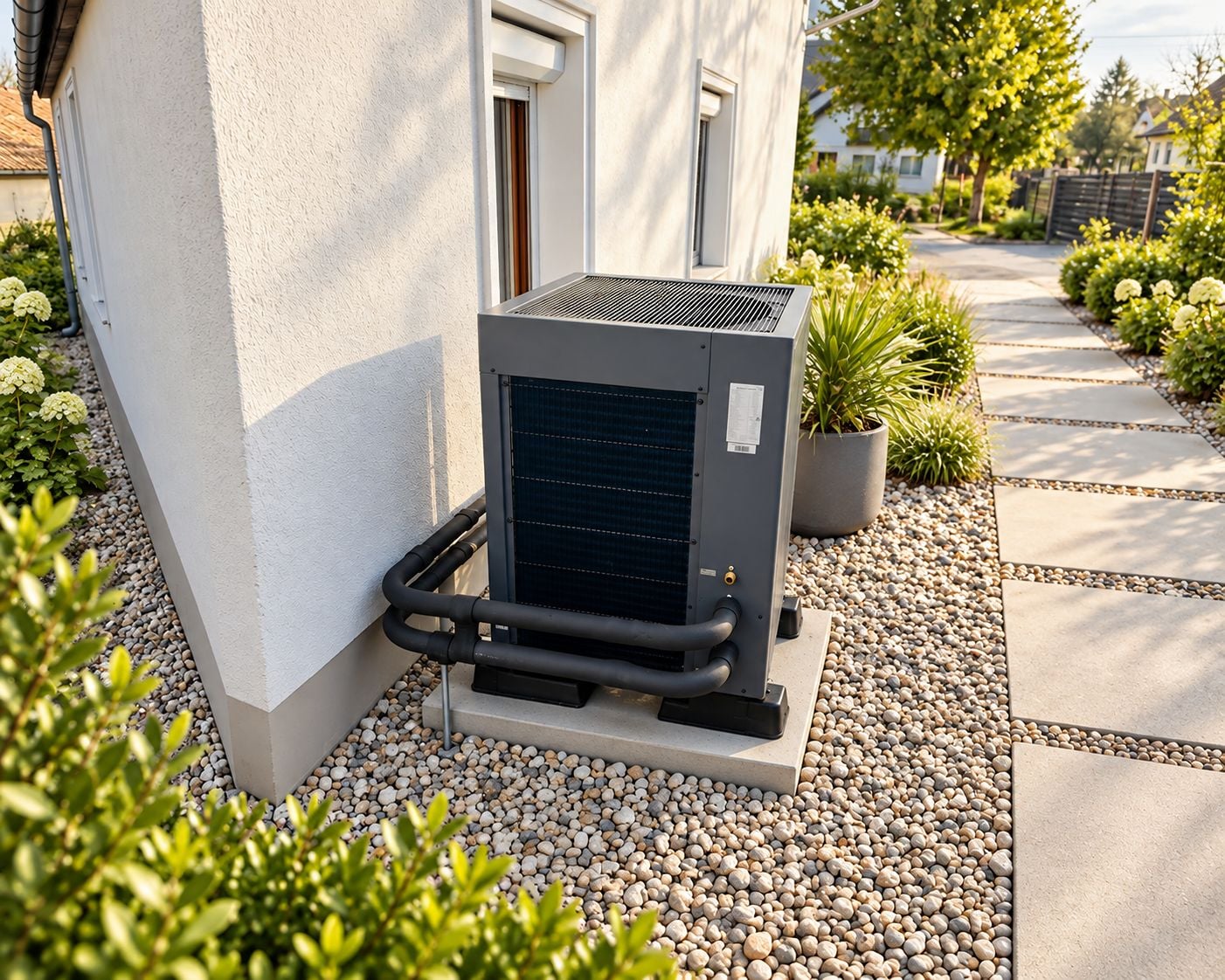
Air inlets and outlets must remain unobstructed, service access should be available and defrost water needs a suitable drainage route. For R290 equipment, the installation must also comply with the manufacturer’s refrigerant safety requirements.
For more details, see JNOD’s heat pump outdoor unit placement guide.
The hydraulic circuit is one of the first areas to inspect.
JNOD’s installation manual requires the water system to be filled and air to be purged before startup. Piping must also be pressure-tested and cleaned before use.
Trapped air, leaks or blocked filters can restrict circulation and interfere with normal operation.
Check that the system is filled to the required pressure and that pumps and valves operate correctly.
Filling and operating pressures depend on the selected heat pump, hydraulic components and system design. Always verify these values against the latest model-specific documentation.
Water flow is equally important. For example, the JNOD JMU90HC has a rated water flow of 26 L/min (approximately 1.55 m³/h).
This is a rated specification, not a universal minimum flow requirement. Actual circulation must meet the selected model’s operating requirements.
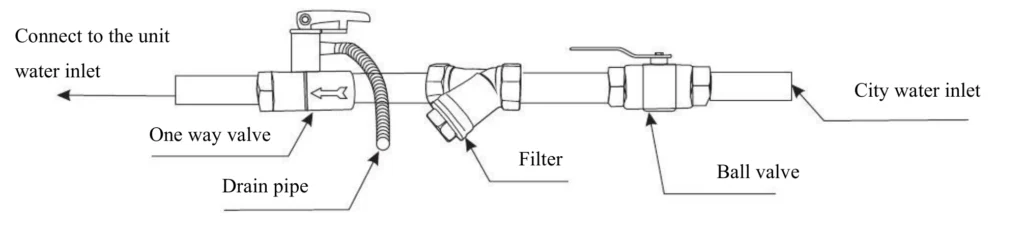
JNOD specifies a mesh filter at the water inlet to prevent impurities from entering the system.
Before startup, check filter installation, confirm that the circuit has been cleaned and remove trapped air.
For systems with buffer tanks, mixing circuits or multiple heating zones, verify circulation through the intended flow paths.
System configuration also affects commissioning. See JNOD’s guide to hydraulic modules and wiring centers for heat pumps.
Qualified personnel should complete electrical checks before energizing the unit.
JNOD’s startup procedure requires verification of supply voltage, grounding, protective devices and electrical connections.
Key checks include:
Electrical requirements differ between single-phase and three-phase heat pumps. Always follow the selected model’s wiring diagram.
Do not proceed with startup until failed safety checks have been resolved.
Once the hydraulic and electrical checks are complete, the heat pump can be started according to the manufacturer’s instructions.
Before startup, JNOD requires installers to confirm that the fan rotates freely, water pipes are correctly connected and no leaks remain.
The JMU top-blow monobloc installation manual specifies an initial observation period of 10 minutes of normal operation.
During this period, check that:
This initial test does not replace full system commissioning. Heating circuits, control settings and operating temperatures still require verification.
The JMU manual also advises against testing Heating or Hot Water mode when ambient temperature exceeds 32°C because protection conditions may occur. Check the applicable limitations for the selected model.
After startup, verify that the heat pump responds correctly to heating demand.
Required flow temperature depends on the building’s heat load and heat emitters. Underfloor heating, for example, may operate at a lower temperature than an existing radiator system.
Compare the controller’s target temperature with measured leaving-water and return-water temperatures. Configure settings according to the approved system design rather than simply increasing the temperature to accelerate heating.
For further technical guidance, read JNOD’s heat pump flow temperature guide for installers.
The system may serve underfloor heating, radiators, fan coils or a domestic hot water cylinder.
Verify that pumps, valves and temperature sensors respond correctly to each operating request.
Where a three-way valve switches between space heating and domestic hot water, confirm that it directs water to the correct circuit.
If weather compensation is enabled, check the heating curve against the design requirements.
R290 is propane, a refrigerant with very low global warming potential. It has an A3 flammability classification.
For R290 monobloc heat pumps, commissioning must account for the manufacturer’s safety instructions and applicable local regulations.
Pay particular attention to nearby openings, potential gas accumulation areas and ignition sources. Operating airflow must not be considered a substitute for refrigerant safety measures.
The European SKILLSAFE EU project provides a guideline on the safe handling of R290 monobloc heat pumps, covering installation, commissioning and maintenance.
Not as a routine step for a factory-sealed monobloc installation.
JNOD’s R290 Monoblock Top-Blow SkyHeat heat pump contains its refrigerant circuit within the outdoor unit.
Normal commissioning focuses on hydraulic connections, electrical supply, controls and required safety checks.
If refrigerant-circuit work is necessary, it must be performed by appropriately qualified personnel using suitable equipment and safety procedures.
The following heat pump commissioning checklist summarizes the main inspection points.
| Check item | What to verify |
|---|---|
| Outdoor unit | Secure mounting, clear airflow and suitable drainage |
| Water circuit | Correct connections, pressure testing and air removal |
| Water pressure | Meets model-specific and system requirements |
| Water flow | Circulation meets the selected model’s requirements |
| Water filter | Correct installation and clean condition |
| Electrical supply | Correct voltage, grounding and protective devices |
| Controller | Normal display and communication |
| Initial startup | No abnormal noise, vibration, leaks or fault indications |
| Heating operation | Flow and return temperatures respond to demand |
| System controls | Pumps, valves, sensors and heating zones operate correctly |
| R290 safety | Applicable refrigerant safety requirements are satisfied |
This table is a practical reference, not a replacement for the manufacturer’s commissioning procedure.
For a more detailed record format, the UK’s Heat Pump Association provides an Air-to-Water Heat Pump Commissioning Checklist and Service Record.
Startup problems do not always indicate a faulty heat pump.
Blocked filters, trapped air, closed valves or incorrect pump settings may restrict circulation. Check the hydraulic circuit before changing operating parameters.
An unsuitable temperature setting may reduce comfort or efficiency. Verify the target temperature and heating curve against the system design.
Incorrect wiring or sensor assignments may prevent normal control operation. Check connections against the approved wiring diagram.
Do not repeatedly reset alarms without identifying the cause. Record the fault code, operating conditions and relevant measurements before troubleshooting.
A commissioning record helps future technicians understand how the system was configured and tested.
Useful information includes:
If weather or site conditions prevent certain checks, record the limitation and any required follow-up.
JNOD’s air source heat pump range includes different monobloc configurations, so commissioning records should always match the selected model and connected system.
Heat pump commissioning is the process of checking and testing an installed system before normal operation. It includes hydraulic, electrical, control and safety checks.
The duration depends on system complexity and required tests. JNOD’s JMU manual specifies a 10-minute initial operational observation, but this is only one part of commissioning.
The correct pressure depends on the selected model, hydraulic components and system design. Always follow the manufacturer’s latest specifications and applicable installation requirements.
The hydraulic and electrical checks are largely the same. However, because R290 is a flammable refrigerant, installers must also verify the required safety clearances, nearby ignition sources and potential gas accumulation areas according to the manufacturer’s instructions.
Successful commissioning involves more than confirming that a heat pump switches on.
Water flow, electrical safety, control settings and operating conditions must be verified before handover.
A clear heat pump commissioning checklist helps installers identify problems early and document the results. For JNOD R290 monobloc systems, the latest model-specific installation manual and applicable local requirements should remain the basis of the commissioning procedure.

 English
 German
 French
 Spanish
 Italian
 Dutch